
Nettie's Olinka Story
The Color PurpleThis thread traces Nettie's missionary work from hopeful arrival through cultural encounter, colonial dispossession, resistance, and departure.
increasing Bearing strength in each event
 decreasing
Bearing strength in each eventdecreasingArrival in Olinka
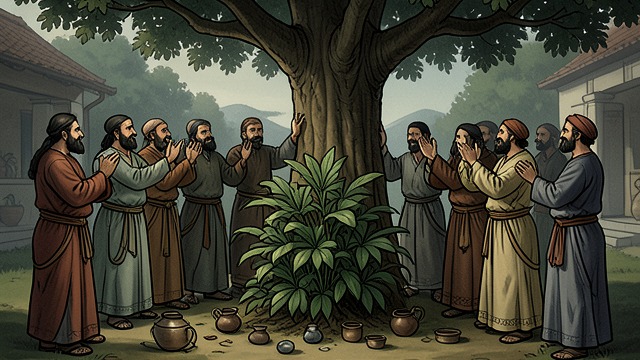
Arrival in Olinka
First Encounter
Nettie, Samuel, Corrine, and the children reach Olinka Village after a difficult journey. The villagers greet them with curiosity, having known missionaries mainly as white outsiders.
The reception unsettles simple assumptions about who belongs in Africa. Nettie begins to learn that her work will involve listening as well as teaching.
Roofleaf Welcome
The villagers tell a story about greed, ecological loss, and the return of roofleaf. Their ceremony presents the useful material as sacred and bound to communal survival.
Nettie recognizes that faith can be expressed through a relationship with land and shared memory, not only through the missionaries' doctrine.
Girls at the School
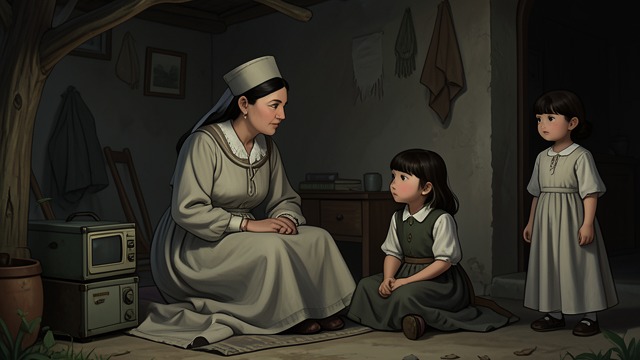
Girls at the School
A Restriction Revealed
Nettie finds that Olinka custom discourages girls from attending school. A local mother describes a girl's future in terms of marriage and motherhood.
Nettie challenges the rule by pointing to her own life, but she has limited authority in the village. Her presence is both an example and a source of tension.
Quiet Lessons
Olivia shares what she learns with Tashi in private. Their friendship becomes a route through which knowledge passes despite restrictions.
Nettie's teaching matters most when the girls make the lessons their own, expanding the reach of the school beyond its formal boundaries.
The Road Through the Village
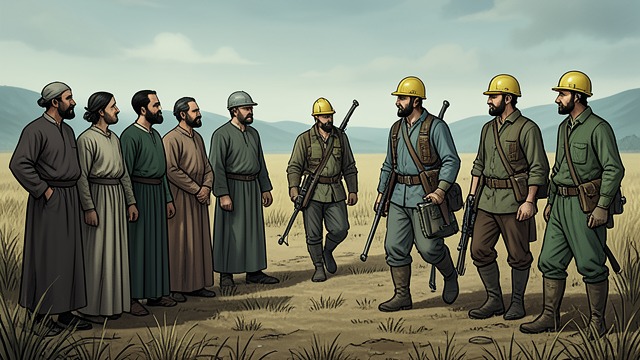
The Road Through the Village
False Welcome
When roadbuilders arrive, villagers offer food and hospitality, believing the road will connect them to the coast. Nettie sees friendship forming across language and distance.
The road's purpose is soon revealed to be extraction, not local access. The visitors' apparent cooperation masks a larger plan imposed from outside.
Land Taken
Armed builders cut through crops, homes, the school, and Nettie's hut. The chief learns that foreign business interests claim the territory and demand rent and water taxes.
The destruction converts a promise of development into dispossession, exposing the violence behind colonial infrastructure.
Roofleaf and Forced Removal
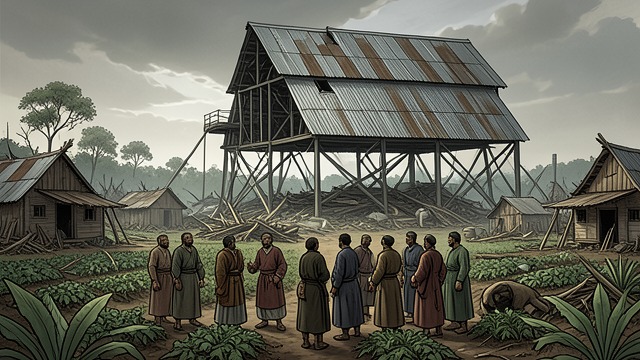
Roofleaf and Forced Removal
Sacred Material Lost
The plantation clears the remaining roofleaf and relocates the villagers to land without reliable water. Corrugated tin replaces the material around which the community's shelter and sacred story were organized.
The loss is both practical and spiritual. It shows how colonial control can destroy a culture's material conditions while dismissing its meanings.
Costs of Survival
The Olinka must pay for water, shelter, and access to land they once used freely. Their gardens and yam supply are damaged, worsening illness and hunger.
Nettie and Samuel remain to teach and assist, but their efforts cannot restore what the plantation has taken.
Leaving and Joining Resistance
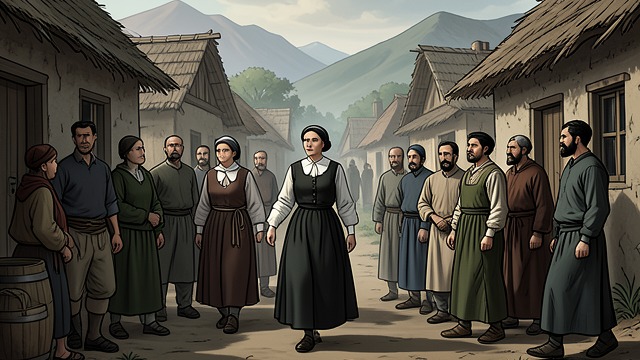
Leaving and Joining Resistance
Resistance Beyond the Village
Tashi and Catherine leave to join the Mbeles, and Adam follows. Their journey reveals a community resisting plantation rule beyond the reach of the mission compound.
Adam returns with Tashi, and their decision to marry is shaped by the conflict between personal attachment and collective identity.
Departure for Home
Nettie and Samuel prepare to leave as the village changes and the missionary work loses its original footing. They carry the consequences of colonial rule and the relationships made in Olinka with them.
The departure does not resolve the injustice, but it shows that Olinka resistance continues beyond the missionaries' presence.
After the voyage from Liberia to the inland village
During Nettie's early years teaching in Olinka
Five years after the missionaries' arrival
After the Olinka are moved to the plantation barracks
After Tashi and Adam return from the Mbeles encampment
